Wednesday, January 31, 2007

Why Didn't Anyone Tell Me This Before?


I have been reading Kenneth Scott Latourette's A History of Christianity: Beginnings to 1500 and read that King Herod was not even Jewish. I had always assumed that he was not only of Jewish stock, but also a descendant, albeit distant, of David. Poor assumption on my part. Apparently he got lucky and married into the Maccabeean family. There he set up a deal with the Romans and appointed himself King of Israel. Of course we all know he rebuilt the temple and everyone lived happily ever after. Well, actually he killed his wife and at least two of his children, his brother in-law, another wife, the other wife's mother, and possible several others just to stay in power, and everyone pretty much hated him, so really no one lived happily ever after.


Anyway, I write all this because I didn't know it before. I didn't know Herod was a Maccabeean wannabe with no real right to the throne. No one told me and it really would have made a lot more sense with the whole scared of Jesus thing. No wonder he killed all those babies in Bethlehem.


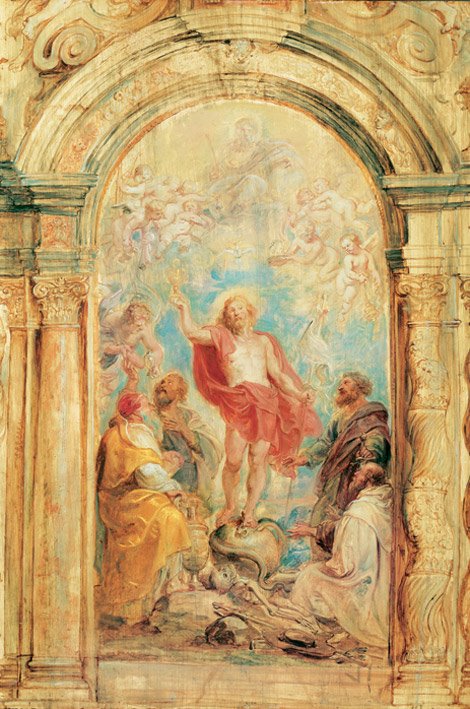
Very interesting nonetheless. Here is Giotto's "Massacre of the Innocents."

Wednesday, January 17, 2007

I Want to Direct Your Attention to . . .


I want to just direct your attention to another blog. Please take the time to look at Real Live Preacher's short 6 minute videos "Read the Bible." They are very thoughtful and he has a lot of good stuff to say for the beginner and scholar alike.

Tuesday, January 16, 2007

Evan's Most Favored 2006 Awards

Okay, it's been a couple of weeks and it's time for Evan's Most Favored 2006 Awards. As you may or may not know, the eligibility is based on my reading, seeing, hearing, etc. in that given year. For instance this years fiction award goes to a book that was published June 1, 2004. However, I read the book in 2006, therefore it is eligible. Remember, these are very fun favorites that you could feel relatively good about supporting. So, without further explanation, Evan's Most Favored 2006 Awards.

Most Favored Movie 2006

This was not particularly a difficult decision as 2006 was a year of mostly unmemorable movies. There were a few that stood out, even a made for TV movie (Sometimes in April about genocide in Rwanda in 1994). But the film selected for this category impacted me on several levels. It deals with some of the same issues as last years Most Favored Movie, death of a parent, juvenile main character, non US setting. And the Most Favored Movie 2006 is . . . Duma, directed by Caroll Ballard.

Most Favored Printed Work of Fiction 2006

As I said earlier, this book was released in 2004, but I didn't read it until 2006. It's author is relatively unknown, but anyone who writes a murder mystery involving rockabilly, taxidermy, and communism isn't sane enough to go wrong. And the Most Favored Printed Work of Fiction 2006 is . . . Pipsqueak by Brian Wiprud.

Most Favored Printed Work of Nonfiction 2006

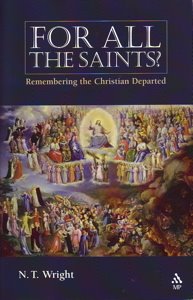
This is always a difficult choice as there are so many great books out there. This year, though, I read three that should be given particular attention: Myth of a Christian Nation by Gregory Boyd, Most Moved Mover by Clark Pinnock, For All the Saints? by N. T. Wright. And the Most Favored Printed Work of Nonfiction 2006 is . . . For All the Saints?: Remembering the Christian Departed by N. T. Wright.


Most Favored Television Show 2006
This is a new show for me. It was chosen for its simple complexities. Not merely because it's another mystery police procedural, but for its nod to Sherlock Holmes in a institutionalized sort of way. And the Most Favored Television Show 2006 is . . . Monk.


Most Favored Magician 2006

This is always a difficult category for me because it's such a limited field. Ricky Jay stole the title from Penn and Teller last year who held it for two years before that. They took it away in 2003 from Lance Burton. This year they take it back because of their hit Showtime show. And the Most Favored Magician 2006 is . . . Penn and Teller.

Most Favored Band/Musician 2006

This is another difficult category because I am so particular about what I listen to. I demand quality writing and overall sound. Julia calls me a music snob. I am a huge fan of Punk Rock and the Blues, but eventually we grow up. This year the award is based on his Songs for Silverman album as well as his soundtrack to Hoodwinked. And the Most Favored Band/Musician 2006 is . . . again . . . Ben Folds.

Most Favored Talk Show Host 2006

This is chosen not based on political views (I feel like I need to make that very clear). It is based on entertainment value. And the Most Favored Talk Show Host 2006 is . . . again . . . Glenn Beck

Tuesday, December 26, 2006

Why I Am a Nazarene: Reason Number 4, We Believe in Free Will, and Can Even Believe in An Open God


Again, I am admitting in these posts that I am an Open theist. To many that is no surprise. I first read The Openness of God about seven years ago and have explored the possibilities and probabilities since. Now, not all Nazarenes are Open theists, but many of us are. Open theism is very agreeable with our Arminian heritage. Because as Nazarenes we believe in free will, we can have a very open view of God.

As we were created in God's image, and God is free to do that which he cannot do without ceasing to be God, we too were given the ability to choose right and wrong. We are free and morally responsible beings (article 7), just as God is free. God is not bound by anything. As an Open theist, I would say that God is not bound by anything, even the future.

Because of this free will that we have, the future is partly open. God has chosen to partner with his created, otherwise, why would he go to all the trouble to redeem us. God, in his sovereignty, chose to allow us to have free will, thus limitting his own knowledge of the future. God knows what he will do, and knows what we will probably do, but allows us to choose that future, and allows himself to change his mind as well as to how he will do what he will do.

We see this extreme freedom throughout scripture. There are numerous instances where God changes his mind (Abraham, Moses, Jeremiah, Ezekiel, Jonah, etc.), changes the way he does certain things, etc. How many times did he decide to destroy Israel and then changed his mind? This is one way in which we see that the future is not determined out right.

Logically, as an Open theist, I do not even say that God knows what I will do. He knows me better, certainly, than anyone else, but doesn't know for sure what I will choose to wear in the morning. If he were to know, that perhaps I am going to wear a button up, then I cannot be free to choose a rugby. Because who am I to go against God's knowledge, and therefore determination of the future? If God knows the future exhaustively, then it must be determined. Whereas if God knows what he will do and has limited himself to the knowledge of what we all might do, then we have true freedom.

In Most Moved Mover, Clark Pinnock writes, "God is the God of hope and we share in his hopefulness. The end is in view, though the precise route to it is open and subject to circumstances" (Pinnock 53). God knows what he's doing, and who are we to question his freedom and right to allow his creatures to affect him?

I am a Nazarene, because within its doctrine I am free to understand God as he has revealed himself to me (scripture, reason, tradition, and experience). We have freedom because we are created in his image and because we are created in his image, the future is partly open.

Monday, December 18, 2006

Why I Am a Nazarene: Reason Number 3, We Baptize Infants


Peadobaptism is a touchy subject with some Christians. Nazarenes handle it with finesse. We decided a long time ago as Wesleyans and Holiness peoples came together that we weren't going to risk splintering the church along certain lines. Therefore, we both baptize infants and we dedicate. I am a Nazarene because we value children, even infants, enough to allow them the grace of baptism.


Baptism is not merely a symbol, if we believed that, we would not be Wesleyan. Baptism, because it is a sacrament, is a means of grace. It is a sacred event by which God bestows his grace to both the catechumen and the congregation. The Church of the Nazarene recognizes that God's grace is even given to infants.


But why do we insist that it's okay to baptize infants, they don't even understand it? Many, even Nazarenes, insist that the catechumen understand baptism before receiving it. It is as though God's grace must be understood by the receiver before God can give it (and who in their right mind would put this limitation on a free God?). Who is to say any adult understands baptism? Most don't know what a sacrament is, yet God gives his grace freely through the sacred event of baptism. Requiring a person have faith before they are baptised is to miss the point of baptism as a means of grace. Baptism calls us to faith. Requiring the faith to which baptism calls us before we are baptised would be to set up a new works-righteousness, and really nobody wants that.


When we understand that baptism calls us to the faith that God gives us, we begin to see that to deny infants the waters of baptism would be to deny God from giving his grace and faith even to an infant. I am a Nazarene because we love children/infants enough to understand that God graces them as much as, if not more than, he graces us.

Friday, December 15, 2006

Why I Am a Nazarene: Reason Number 2, We Aren't Fundamentalists, but We'll Sit in the Pew Next to One


Now that I've thoroughly bashed things Funda-Reformed, I would like to give balance to yesterday's reason. I love the church of the Nazarene and I am a Nazarene precisely because an Open theist such as me can sit in the pew next to a Fundamentalist. Not only can we sit in the pew next to one another, but we can share/receive Holy Eucharist together, praise be to God Almighty.


It is extraordinary that the Christ of Our Lord chose disciples of such varying background. Christ called together the tax collector and the zealot, and we know that for the most part they lived, worked, ministered, and worshiped well together. Imagine the love and grace it must have taken for Jesus to bring together such opposing personalities. Yet he is at work in us today. Lion and lamb next to each other in the same pew, worshiping in faith community with one another.


Despite my impassioned plea against the verbal/epistemological inerrancy of fundamentalism, I will make room in the seat next to me any day. This is what it means to be a citizen of the Kingdom of God.

Thursday, December 14, 2006

Why I Am a Nazarene: Reason Number 1, We Are Wesleyan, Not Fundamentalists


I love my church. Locally, for the most part and certainly in my situation, it cares deeply for its pastors. Generally, for the most part it cares for its people, even when it seems to give in to the kingdom of the world sort of politics and polity, but I'll overlook those things for now.

The first reason that I am a Nazarene has everything to do with our understanding of scripture. When my wife recently applied for a position in an unnamed organization whose name contains the word "Christian" she was to sign a "Statement of Faith" documenting that she agreed with and adhered to a list of statements regarding some aspect of the Christian faith. Topping the chart at number one was a statement concerning scripture. It reads "I believe the Bible to be the verbally inspired and only infallible, authoritative, inerrant Word of God." The first statement of faith is about Scripture, not God and not only is it about Scripture, but of one that is verbally inspired, only infallible, authoritative, and inerrant Word.

I love the Church of the Nazarene because we don't put scripture ahead of God and because God is an issue of love and salvation, not merely (only) of truth (it is this truth that comes from love and salvation), and because nowhere in our 4th Article of Faith (that's right, 4th, after the doctrine of the Holy Trinity, the doctrine of the Divine Christ who is the God-man Jesus, and the doctrine of the Holy Spirit) do we confuse the Holy Scripture as written word of God with the Christ of Our Lord as the (big W, capitalized, proper) Word of God. (You may now take a breath.) The point is more eloquently written by Rob Staples in his Outward Sign and Inward Grace. He writes, "Fundamentalism tends to need proof texts for its positions, because its view of biblical authority rests on particular concept of verbal inerrancy. Inerrancy as taught in Fundamentalist theology may be called 'epistemological inerrancy.' That is, it believes the basic question in theology to be: What is truth? . . . . For Wesleyanism, the basic theological questions is: What must I do to be saved?" (Staples 173).

As Wesleyan folk, we Nazarenes don't bring the idea of Truth to scripture, we allow scripture to determine Truth. "I am the way, the truth, and the light, no one comes to the Father except through me" (John 14:6). For the Wesleyan, as Staples writes, "Truth is determined and defined by what salvation is, not the other way around" (Staples 174). Truth is subject to God. Truth is for God to decide. For the fundamentalist, truth is eternally existent/existence and only then may scripture be determined as truth and therefore only then may God be determined as truth. It seems that if we allow Truth the precedent over God, then we allow God to be nailed down again.

What is true must be good and is communicated by beauty. Truth is held in balance by Good and Beauty. I love the Church of the Nazarene because we do not commit idolatry in our understanding of Holy Scripture.

Wednesday, November 22, 2006

Thankful


This is a only one day of 365 for us to be thankful and though it is sappy sentimentality (that's my synical self talking) here are my cheepened-by-the-internet thank yous.


I thank God for his gracious provision and deliverance in my own life. It is by his grace that I am alive.


I have supporting, liberating parents who helped to teach me that independent thought and search for answers is better than being told what to think. I am sure not to be in the church today had they just told me to be Christian or else. I thank God that he let them teach me and that he gave me so many uncomfortable questions to ask them.


I have a family, though loud and obnoxious (with special emphasis on obnoxious), is still the best family in the world. I thank God for them.


I serve in an international church that at times seems to act injustly, favoring rich Americans over the poor and sick here and in the rest of the world, yet is still willing to change (however slowly) seeking out new ways of helping the poor (this includes an uprising of a generation of pastors and laity who seek to reflect the influential power-under of Calvary and right wrongs of social injustice, God help us to do that more). I thank God for the Church of the Nazarene, may God help us to never put down the cross in favor of the sword.


I specifically serve a local church whose people have shown us grace and love and support. I thank God for a church that does so much for the poor of Dayton (Target Dayton) and throughout the world (Dominica) and who is open to the idea of ministry to the whole family, whatever that family may look like. May God continue to bless Parkview Church, so that it may bless the world.


Lastly and most importantly, I have a beautiful, loving wife whom I do not deserve. She shows me the very grace of God even when I'm in a bad mood and short with her. I thank God for her, every day. Thank you.

Wednesday, November 15, 2006

Skinny Dave or I Will Be Your God and You Will Be My People

Yesterday, Julia, Paul, and I went to a lecture with Tim Green. It was a refreshing reminder of the prophetic voice of undividedness in the Deuteronomic (Deuteronomy) and Deuteronomistic (Joshua, Judges, 1 & 2 Samuel, 1 & 2 Kings, Hosea, and Jeremiah) texts. This was a bit of a review of my first masters class at SNU last year with Tim. During the class, I was reminded of a friend of mine in Florida. I call him a friend, but I haven't really put forth any effort to stay in contact with him. Which of course, speaks more about my lack of friendship to him, but nonetheless, I'll call him friend even though it's been eleven years since I've seen him.

Skinny Dave was a crack addict. He was older than me by a few years. He had a wife and two children in another state. I don't remember how he had begun, but while I knew him, he was more than definitely an addict. He would be fine, we'd hang out, talk Rock and Roll, The Smiths, Morrissey, Elvis Costello (still my favorite), Pearl Jam, Midnight Oil, Living Color, the Clash, Green Day, and theology. We'd drive around, eat at Taco Bell, hang out, whatever. It's what we did. Then, every two or three months, he'd disappear.

He was living with his mom and dad and I'd get a call from them, "Hi Evan, have you seen Dave in the last couple of days?" I would tell them no, and they'd thank me and hang up. We all knew it had started. He'd go missing for a week, sometimes longer, and then he'd call his parents from jail or he'd show up somewhere strung out and broke. It didn't matter, though, Skinny Dave was my friend.

One time, in my naivete, I asked him what crack had that God didn't. Skinny Dave said, "There's no feeling in the world like it. There's no high like it. and when you're up, you are the most generous person in the world. Then, the bottom drops out from under you and you there's nothing you won't do to feel that way again. Nothing!"

Skinny Dave sometimes lived in a halfway house. A guy in the church, who did this sort of thing, would work with him. The guy talked to me about Dave a lot. One time he told me that what Dave needed was some tough love. I think it's tough to love a crack addict in the first place, but I don't think that's what he meant. After the binge, Skinny Dave would come back, penitent, and he'd be fine for a few months, ridding his body of the drugs, cutting out that crap inside of him.

We worked our way through the Deuteronomistic texts yesterday (and this is most clearly illustrated in Judges) and Israel would be going along fine, then they'd slip back into their old ways of worshiping Ba'al. God calling out to them, "I will be your God and you will be my people." Moses, Joshua, Samuel, Elijah, Josiah, and sometimes even God himself would remind them of God's deliverance and provision. Israel would fall into the tyrannical hands of some other nation who would enslave them and when they were tired of it, they would repent, and cry out. Once again, God would deliver them.

I hear Joshua saying "make your choice, God or Ba'al. Me and my clan will serve God." Israel would respond, "Of course we'll serve God, we wouldn't be God's people if we didn't." And Joshua would say, "Okay, but you can't do it." They couldn't either. I can't either. And Skinny Dave sure couldn't do it. Three months later, Skinny Dave would disappear, this time with his mother's car, using it to buy more crack.

In Moses' sermons in Deuteronomy he constantly tells Israel, "The Lord God is One, Love the Lord God with all your heart, with all your soul, and with all your strength." But they couldn't. Toward the end of the sermons, Moses finally gives them the answer they've needed. Deuteronomy 30:6 "The Lord will circumcise the foreskin of your hearts and the hearts of your children, so that you can love him with all your heart, with all your soul in order that you may really live." I can't do it, but God can.

I thought a lot about Skinny Dave yesterday and today and will probably think about him tomorrow. He reminds me of, well, me. I can't do it either. It is only by the grace of God that I have life. All that I have is his, but I can't do it. So, I pray that God circumcise my heart that I may love him undividedly. "Lord, I believe, but help me in my unbelief." I know without God's grace, I'll be back to my church growth, manipulative, productive, baalistic, idolatrous, consumerist ways in just a few months no matter the measure I take to purge all the poles, pillars, and priests of Asherah and Ba'al out of my life.

I don't know what has happened to Skinny Dave, but I hope he hears God's call as clearly as Skinny Dave has helped me to hear it. "I will be your God and you will be my People."

Tuesday, November 07, 2006

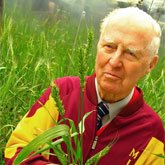
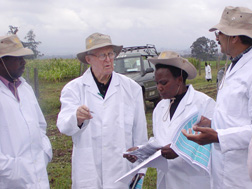
Norman Borlaug


Heroes are great. The people we look up to and who influence us are so important. Our parents, pastors, great theologians and teachers, all keep us going. I want to introduce you to one of my heroes, Norm.

Norm is a great guy. He was born March 25, 1914 and while his birthday will probably never be celebrated the way it should, you will remember his name when this story is finished. Norm was the descendant of Norwegian parents. He grew up on a farm in Iowa and attended a one-room school house until the ninth grade. Sports were important to Norm, as to any kid his age. He played baseball and wrestled in high school.

It was his grandfather who pushed him academically. He wanted nothing more for his grandson than to get a good education and to work hard. As a result, after high school Norm attended the University of Minnesota. Because of financial strains, though, he frequently had to dropped out and earn money for tuition, room, and board. During one hiatus from school, Norm worked for the Civilian Conservation Corps where he helped jobless men work federal projects. While working for them he discovered that many of the men were starving and malnourished.

When he returned to school, he studied agricultural biology and plant pathology. In 1942, Norm earned his PhD. It was in 1944 when he started his work in Mexico. The Rockefeller Foundation needed someone who could figure out how to increase wheat yields in the agricultural areas and to help starving folks out of poverty. He did just that. Norm genetically altered wheat and corn to grow on shorter stalks, bigger heads with increased yields. Because of his work literally millions were saved.

By 1960, Norm was looking somewhere else in the world. By the mid Sixties, he was in India and Pakistan where one of the world's worst famines was killing millions of children, women, and men. Again, using the altered strains of wheat and corn, Norm saved millions. The decade was not without adversity. Between politics of the region, Mexico, and US Customs, Norm almost failed.

By 1970 it is estimated that Norm literally saved over 1 Billion people. For those of you in the UK that's a thousand million. That was also the year that Norm won the Nobel Peace Prize for his humanitarian efforts. But the award slowed him down. According to an interview with David Turrant of the Dallas Morning News, Norm said, "It was a disaster as far as I'm concerned. You get pushed into so many things. A lot of your energies are cut off from the things you know best. Some of them you have to do. Because you end up being the spokesman for science in general."

Now while Dr. Norman Borlaug fights to keep hungry people fed in Mexico and Africa he is forced to fight extremist organizations like GreenPeace who convince corrupt governments in Africa from receiving genetically altered seeds. GreenPeace calls such food "frankenfoods" and protests, at times violently, their use. GreenPeace supports the strict use of organic foods in supermarkets and in homes. What they don't tell you is that if all of the earth's farmable land (that would include cutting down every rain forest in the world) were used to grow and raise only organic foods, two thirds of the world's population, that's over 4 billion (4 thousand million) people would die. While Dr. Borlaug feeds the world, GreenPeace would starve it to death and they're not alone. There are other organizations (such as Organic Consumers Association and Rainforest Action Network) that allow people to die in the same way. I prefer to allow people who are starving to death go ahead and eat while GreenPeace searches for evidence (any . . . at all) that genetically altered foods can hurt us. Thank you GreenPeace for caring so much.

However sarcastically I treat GreenPeace, my prayers are with Dr. Norman Borlaug. May God bless him as he does what the Church doesn't even seem to be able to do. Perhaps we, the Church, could see Dr. Borlaug as a hero and may he inspire us to follow in the footsteps of the Christ of Our Lord in feeding the hungry! If you would like to find out more about Dr. Norman E. Borlaug go here or here or here.

Thursday, November 02, 2006

This Is a Casting Call for One Thing


What that one thing is I don't know. What I do know is that I received one forwarded email this morning and it sparked my interest. How one email sparks interest, I'll never know, especially considering it was a forward. You've all gotten one before. I know you have. You delete it, or ack, you read it. Some of you do something even worse, you forward it to everyone you know. That one becomes many. Some of you, and I among you on this one, think yourselves discerning and read it. Then, again thinking yourself discerning, you choose one among many forwards to forward and maybe you only forward that one to only one other.

All of that to say, today I recieved one that sparked in me the idea for "One Thing." This will be a post theme for our blog. Occasionally when I find an appropriate "One Thing" I will post it under that heading here on this blog.

So, without further discussion, here is the One Thing that caught my breath today. It is an artist by the name of Peter Callesen. Apparently he makes things with One sheet of paper. So, enjoy. If you would like to see more of Peter Callesen's work visit him here. If you come across One Thing that catches your eye, email me at thesecretllama@sbcglobal.net or comment here.

Thursday, October 19, 2006

Grief as Love in the Presence of Absence


In dealing with Don's death, I have recently sought the comfort of God through the writings of N. T. Wright. Specifically, I have read For All the Saints? Remembering the Christian Departed. Through it all, after dealing with purgatory, heaven, hell and all that, Wright shares three parts to his conclusion.

First, "What happens to the soul?" He avoids all talk of the soul until the very end, and in truth still avoids it somewhat. Personally, I am reluctant to talk of the soul. Scripturally the dichotomy is post-exilic. And really, it is stressed the most in these binarily opposed, Platonic terms by Paul (obviously Roman educated). Wright however settles without settling (and I think I like this). In reference to Revelation 6, he refers to the soul as a "useful way of talking about personal continuity despite bodily discontinuity." Wright talks about the Cambridge physicist/theologian (a combination of biblical proportion, snicker), John Polkinghorne who said, "God will download our software on to his hardware, until the day comes when he gives us new hardware on which to run our own software once more." Clever and without the Platonic mishmash. Polkinghorne leaves gray what the New Testament leaves gray. Wright writes, "You could simply say, if you like, following Polkinghorne's image, that those who have died as a part of God's people are sustained in life by God. Couple that with Paul's remark about 'departing and being with Christ', and that's about as far as you can go in terms of what the New Testament teaches."

Next, Wright tackles "Praying for and with the Dead?" I think here we have an interesting problem for most protestants. The assumption is that without purgatory (Wright clearly doesn't believe in purgatory, by the way) there is no reason to pray for the departed. Because of the promises of Christ, there is no need to convince God to accept those whom he has already accepted. However, Wright says, "True prayer is an outflowing of love." When we love someone, we will want to pray for them, no difficulties, no needs, but merely "because holding them up in God's presence is the most natural and appropriate thing to do." God also chooses to work through our prayers (personal emphasis on chooses to those who think he must) to bless others. Our love doesn't stop at death. Wright might say that grief is love in the presence of absence. Grief is "the form love takes when the object of love has been removed; it is love embracing an empty space, love kissing the air and feeling the pain of that nothingness." He concludes that there is no reason why love ends at death. Love continues and can continue through the prayers that lift the loved one up in prayer before the mystery of God. The prayer for the departed becomes a celebration! Here, here, Wright!

Finally, death is not the end, but neither is the rest (heaven, paradise, etc.) after death. Our hope is in the Resurrection. We believe in Christ's Resurrection, his the first, and we believe in our own resurrection. The Apostle's Creed and Scripture are clear regarding this bodily resurrection to come. Wright talks extensively about the disparity between the Scriptures and the belief of many folks in the eternity in heaven. Heaven/Paradise is not our final destination, the resurrection and the New Heaven and New Earth as one is! So, Wright has encouraged a change in the liturgy of funerals. No longer should we say, "May the souls of the faithfully departed rest in peace." He encourages, as would I, dropping "the souls of" and adding "and rise in glory."

So, I say it now, May the departed, through the mercy of God, rest in peace and rise in glory. Grief is such a hard thing for me to talk about. I still cry at the mere mention of my brother's name or the playing of B. B. King and Eric Clapton. But it is gradually getting (not easier) better. Such is the process of grief. I pray in love, that Don's rest in the presence of Jesus Christ fills him with all the grace of God and that same grace will fill me and comfort me and my sister, Marsha and their boys Chad and Chandler and the rest of our family. May he rest until we rise again in glory. Amen.

Monday, October 16, 2006

Mythology, Time, Space, and Narrative


I have been delving into the retcon mythology of Clark Kent and Superman's beginnings through the television show Smallville. So far, I have seen the first four seasons and am awaiting, not so patiently, the fifth to be returned to the local movie store. Superman happens to be my favorite of all superheroes. Sure, this says a lot about my shallow popculture tendancies, but nonetheless, it's true. After this summer's movie, perhaps not the box office success it would have been had Pirates of the Carribean 2 not come out a week after Superman Returns, this childhood love for the spandex wearing superhero was reaffirmed. When I was a kid, I had Superman Underoos and I'm ready to publicly admit it. (Oh, well, there go my chances at a promising political career, shucks!) I would often visualize myself running alongside the car on family vacations, and even dream about helping folks out of jams perhaps winning the affection of some love struck reporter. Alas, I grew up. Now, I watch others act it out on the television, still somewhere deep in my imagination, dreaming of being the righter of wrongs.

However, in thinking so much about it and watching so much of Smallville, I have wondered how Superman et. al. fit into mythology. What purpose does mythology serve? Does it still serve that purpose today? For folks who find themselves in postmodernity? Do we allow ourselves to be moved by mythology?

As a Christian, Wesleyan-Arminian, Open theist, and poet, I have to say that I know we have mythologies (classically speaking of course). We have our creation mythologies (sic), and our flood mythology (sic), and the rest. And they do what mythology has done for folks throughout time. They are an oral, now written, explaination for the world around us. Now, to merely speak of scripture in these terms would be shortsighted as scripture is not about how or what, but rather about who. In this case, God created, etc. For me and those out there like me, though I understand they are few and far between (at least who would admit to it), Scripture is the written revelation of God to his people. These mythologies still define us, help to shape us.

Robert Graves, author of Greek Myths and Legends, wrote, "True myth may be defined as the reduction to narrative shorthand of ritual mime performed on public festivals, and in many cases recorded pictorially." In fact, many myths stem from many cultural needs. Do we have cultural needs as Americans as much stuck in as freed by postmodernity? Then, do we have mythologies and would these mythologies be super heroes?

Jerry Siegal and Joe Shuster created Superman in 1932 while living in Cleveland, Ohio. This was during the Great Depression and there was certainly cultural need for mythology. Of course Action Comics #1 featuring the Kryptonian didn't debut until 1938. This superhero wasn't there to provide a fantastical escape, as some opponents to entertainment would deduce, but rather to inspire hope. While certianly more jingoist now than it would have been at the time, Superman was there to defend "Truth, Justice, and the American way." His positive tone and historically moral opposition to evil constantly sold more and more comic books.

Julia and I have often talked about how different Superman is than other superheroes. There is never the question of whether or not he will do what is right. That just does not seem to be the point. Rather, Superman has come to right the wrongs. The story of how he became Superman is more important than whether or not he will choose good or evil. The question of which came first, Clark Kent, Kal-El, or Superman, is more important a question than whether or not he will choose good or evil. The choice is still there, mind you; Superman still chooses to do good over evil. For other superheroes this is not the case. It is simply not that simple.

So, is Superman a part of our American/Western (not all bad) mythology? Does he inspire hope? There are criticisms of Superman that associate him to Moses or even a Christ figure. And though both allusions are supported, the illustration would fall short.

What remains is that perhaps a boy in his Superman underoos, flying around his house with a blankey cape tied around his neck is inspired to hope. Perhaps a God who loves us so much that he would rather die than live without us is free to use such entertaining mythologies to inspire hope in us.

Friday, October 13, 2006

Ramblings at Apple Butter Time

Today we made 2 batches of apple butter. Mom gave me about 5 lbs. of the apples she had picked with Carolyn at home (Havana). We bought another 3-4 lbs. today and spent several hours peeling, slicing, cooking down, stirring and canning them into some very tasty apple butter. At last, Autumn is here.

Evan began his canning career last year when someone gave us a Walmart bag full of tiny pears. They were going bad, because we weren't eating that many. He already had an inkling to make some salsa and can it for Christmas gifts, but when he decided to make pear butter out of those gift pears, he caught the canning bug. He eventually canned 2-3 batches of hot hot and southwestern salsa, pear butter, and pickled garlic.

Speaking of canning, jars, and such, while I was at home last week I had to get a ladder, lug it out to the saw mill and pilfer through several stacks of canning jars my dad had stored up in the rafters. I was looking for any extra old blue jars to add to my old jar collection. I found 4 more. Here's a picture of my jars.

I usually find mine like I did last week, in Dad's barn, in among the rafters of a building, or digging them up in our woods.

pickyourown.org gives a brief history of the canning jar. Among the interesting information,

"Meanwhile, in Buffalo, NY, William Charles Ball and his brothers (Lucius, Lorenzo, Frank C., Edmund Burke, and George Alexander) were in the business of manufacturing wood-jacketed tin cans for the storage of oil, lard and paints. In 1883, the Ball's changed from tin to glass containers and then, in 1886, to glass fruit jars. They moved their operations to Muncie, Indiana, after a fire at their Buffalo factory. Muncie (where a supply of natural gas had been discovered) was chosen because the city was offering free gas and land to rebuild the factory. "

There's more about different companies and types of jars there. I think I have mostly Atlas and Ball.

I like going home because of my pilfering, or rather, rescueing abilities. I have rescued a number of crocks, milk glass, old bottles, and my most recent rescue pictured here:
Canning reminds me of home and those hazy memories I have to think hard to think back to . . . my Dad used to can all sorts of stuff in the summer kitchen next to the house. Pints and pints of tomates, which he would drink all winter to keep from getting sick. The wonderful blackraspberry jelly he made when he had a grove of bushes. He would give almost all of them away at Roat Christmas. I guess we're carrying on the tradition.

Monday, October 02, 2006

One Year


His laugh was infectious. Whenever something funny would come up, not something mildly funny that the rest of us would laugh at, but rather something truly and mysteriously funny that could only be delivered by Bill Murray, Steve Martin, Chevy Chase, or Jerry Lewis, Don would start to laugh and that was the end of world as we knew it. From there the rest of the room would catch it and it would continue spreading until finally everyone with tears in eyes would be croaking out the laughs. Don Cuttill could laugh as no one could laugh. And when he did, everyone else was consumed with laughter. I think the contagiousness of his laugh had something to do with the size of his heart. Only someone with a huge heart could laugh the way he did.

I remember one time, when I was in college and living with Don and Marsha in the old Southshores house, we had to replace the wax ring seal underneath the toilet in the basement. After unscrewing the bolts we tried to lift the toilet. Don had to move into the shower to set the toilet aside. I was on one side and Don on the other. Don's foot hit the lip of the shower and he tripped. I dropped the toilet in the shower and it shattered. We no longer needed to merely replace the wax ring; we had to replace the toilet as well. Though it was thouroughly enraging, I laugh about it now, and I'm sure he does too. The picture of Don dropping the toilet and it shattering stirs other memories of Don.

When we'd drive around together the radio tuned to the classic rock station, and Led Zeppelin would come on. Don would inveriably say, "A little Led for the head." It was cool no matter how many times he'd say it.

Don liked good movies. Caddyshack, Groundhog Day, Stripes, Young Frankenstein, The Nutty Professor, It's a Mad Mad Mad Mad World all brought on that infectious laugh. Sometimes I watch Groundhog Day just to remember Don. I've easily watched it five times in the last month and a half.

Don is a Christian, which means that this November 1st (All Saint's Day) I will be celebrating him. I will be praying that the Father's glory fills him continually as he basks in God's presence in Paradise, Don sitting next to all those other saints of the church and he's playing a heavenly Martin guitar, strung by angels themselves. You know at the feast they serve Krekel's burgers and Famous Dave's barbeque. This is not the final destiny for which he is bound, though. We all await the resurrection.

The golden evening brightens in the west;
Soon, soon to faithful warriors cometh rest:
Sweet is the calm of Paradise the blest.
Alleluia!

I miss him terribly. Writing this is harder than you can imagine and it's taken a week. I was very young when my sister and Don were married. They lived with us for a while and I really have no memories without him. That is to say until this past year.

Sunday, October 01, 2006

Woods


Yesterday I came home to my mom and dad's house for a few days of much needed retreat. I think I tend to build up this place in my mind a bit more than I should. I want to walk in the woods. Pick up strange stuff. Find buried pottery. Then when I come back it's really hot. There's a lot of poison ivy that I have to avoid. At night it is more starless, blacker than I'm comfortable with.

Last night as I was falling to sleep, just outside my window (on the second floor), coyotes started yelping. They were running through the trees. They seemed to be surrounding the house. Then a loud howl. Silence. More yelping. Another howl. Then silence.

I thought of my ancestors who carved out cabins and houses in these woods. Hearing those coyotes only a few feet away in the surrounding woods. I finally fell asleep.

Wednesday, September 27, 2006

Kid U Conference

Evan and I just spent the past couple days in Columbus at Grove City CoN at the Kid U conference sponsored by Kidology. I have to say for the price and the distance it was well worth the money. Evan even said that in some ways he found it more valuable than CPC. It is a good length (Fri pm and Sat am-afternoon). They had a fairly good mix of visionary and practical information.

The speakers placed a heavy emphasis both avoiding burnout and family ministry. Both of these topics have been near to our hearts lately, so it is good to hear that this is what others in the field are talking about as well. BTW, get ready for family ministry because it is redefining not only how pastors view their role (vocational expectations, placing the responsibility for children's spiritual lives back into the hands of parents, etc.) but also how we view the church in general.

My main comments however, stems from a conversation Evan and I had with a NCPA (Nazarene Children's Pastor's Association) board member and the upcoming Ignite! conference in Kansas City. I had posted a rant just a few days ago regarding my disappointment with what I felt was yet another lazy attempt by the CoN to "resource" its local ministers. My rant as follows: "OK, I know this is a little off subject, but I just read the info on the NCPA (Nazarene Children's Pastors Association) conference in October and I think the problem of Naz white flight [HQ moving to Lenexa] continues because of all-around general laziness (theological, ethical and otherwise). There's so much that could be said right now, but essentially, why would I pay over $200 in conference fees alone to hear what is going on in Lenexa, Kansas in children's ministry? Ohio, perhaps? Oklahoma . . . really? Something is actually going on there???Incredibly (or not) three of the four speakers for the conference hail right from the KC area. (No hotel or travel?) But please tell me that there are other people -- yes, even Nazarenes -- who have as much to offer as these people who could use a wee bit more street cred right now (besides the fact that they or their spouse have been affiliated with HQ in the past) . . . I mean, who cares if they're "Wesleyan" at this point. Anyway, I bring this up because it seems to further support your suggestion of insulation, us vs. them mentality, i.e. running for the hills that is apparently paralyzing the denomination. We are simply more willing to pay the price for mediocrity than do whatever it takes to be citizens of the Kingdom of God here on earth -- even if it means losing ourselves in the process. All for today. Sorry, it's 1:45 a.m. ET which I think makes it even more irritating. Disclaimer: Evan told me to go ahead and post this. Of course, he was asleep when he gave me his blessing. I'll have nothing to do with it tomorrow."

So then, my conversation with said board member at KidU was very enlightening. What she explained to be the purpose of this conference was far different from the promotional material posted on the website. http://www.nazarene.org/ssm/children/ncpa/ignite.html. As she stated it, some members of the board asked themselves, what is the best thing about us (the NCPA group) getting together each year (which they do 2 x a year)? They came to the conclusion that the opportunities that they had for sharing experiences and ideas with one another, encouraging colleagues in specific situations, and general networking were the most valuable things they did during their time together. They wanted to give this opportunity to others not serving directly on the board. But the only way this basically voluntary group could do this was through HQ involvement Sunday School/children's ministry. Hence K.C.. Hence speakers speaking gratis. Understood.

NCPA, from my limited understanding of its history has been one of the few recognized voices advocating for children's ministry in the CoN. They are doing what they can. I appreciate that. I don't know that Evan will be able to attend this conference, but I hope it is able to fulfill the expectations set out by the NCPA. This is an effort by children's pastors to do what the denomination seems to be reticent to do from within. But considering the church almost disbanded children's ministries on a denominational level at one point, I suppose it's better than nothing.

Tuesday, September 26, 2006

Reflection Part 2: First things first


I'm posting this first, but you'll read a post of some of my initial reflections upon the KidU conference Evan and I attended last Friday and Saturday later.

A lot was said about family ministry - expanding our vision for what it means to minister to the spiritual needs of children. And I think it's true - as a matter of vocation for pastors and responsibity for parents - to return that responsibility for children's spiritual lives to the parents. That, however, represents a reality shift for how many churches perceive the purpose and place of children in their local church.

More on that ask Evan.

The one concern that I have stems from a few comments I heard throughout the day. My impression was that we take care of "our own" children first. It may even be ok to favor them. Then our ministry to other children kicks in . . . Is that true? Do "our own" children matter most simply because we have legal claim to them?

Please tell me, is it creepy that Evan and I, having no children of "our own," still work in children's ministry? What in the world would motivate us to take on the spiritual lives of other people's children?

There's got to be something more than family ministry - as important as that shift is - because the family itself reflects the relationships we find as citizens of the Kingdom of God. Just as a man and a woman coming together is a symbol of Christ and his Church. We are no longer mother and son, father and daughter. We are all brothers and sisters in Christ.

Monday, September 25, 2006

Family Day


Today is Family Day. Family Day began in 2001 by the National Center for Adiction and Substance Abuse at Columbia University. Visit their site here. CASA Research "consistently finds that the more often children eat dinner with their families, the less likely they are to smoke, drink or use drugs. The conversations that go hand-in-hand with dinner will help you learn more about your children's lives and better understand the challenges they face."

Family Day was created as a way to help reduce subtance abuse in children and is celebrated on the fourth Monday in september every year. On the web site, CASA says, "Family Day is not just for families. It is a day for all to celebrate, including businesses, unions, religious organizations and community groups. The symbolic act of regular family meals should be promoted and celebrated inside and outside the home throughout the year."

Isn't it interesting that this research organization at Columbia University is telling us to do what we need to be doing as the Church every Sunday. As citizens of the Kingdom of God, we have a meal that we eat together (although as Nazarenes we don't receive often enough), Holy Eucharist. Remarkably, it too is a meal that should be linked to the reduction of adiction, poverty, AIDS, violence, greed, and war. Perhaps if we received more often, the world would see the grace of God spill out of us more often into a world that so desparately needs it.

I am of the opinion that the best possible response to worship and a sermon on Sunday, is by washing it down with Holy Eucharist. I am also of the opinion that the best response to Holy Eucharist is to go into the world and make suffering folks lives better.